Good food should not become waste.
The Zero Waste program connects food that is safe for consumption with people facing hunger and social vulnerability, strengthening ONG É Por Amor’s Community Kitchen and expanding the social responsibility of corporate partners.
A practical response to two urgent challenges.
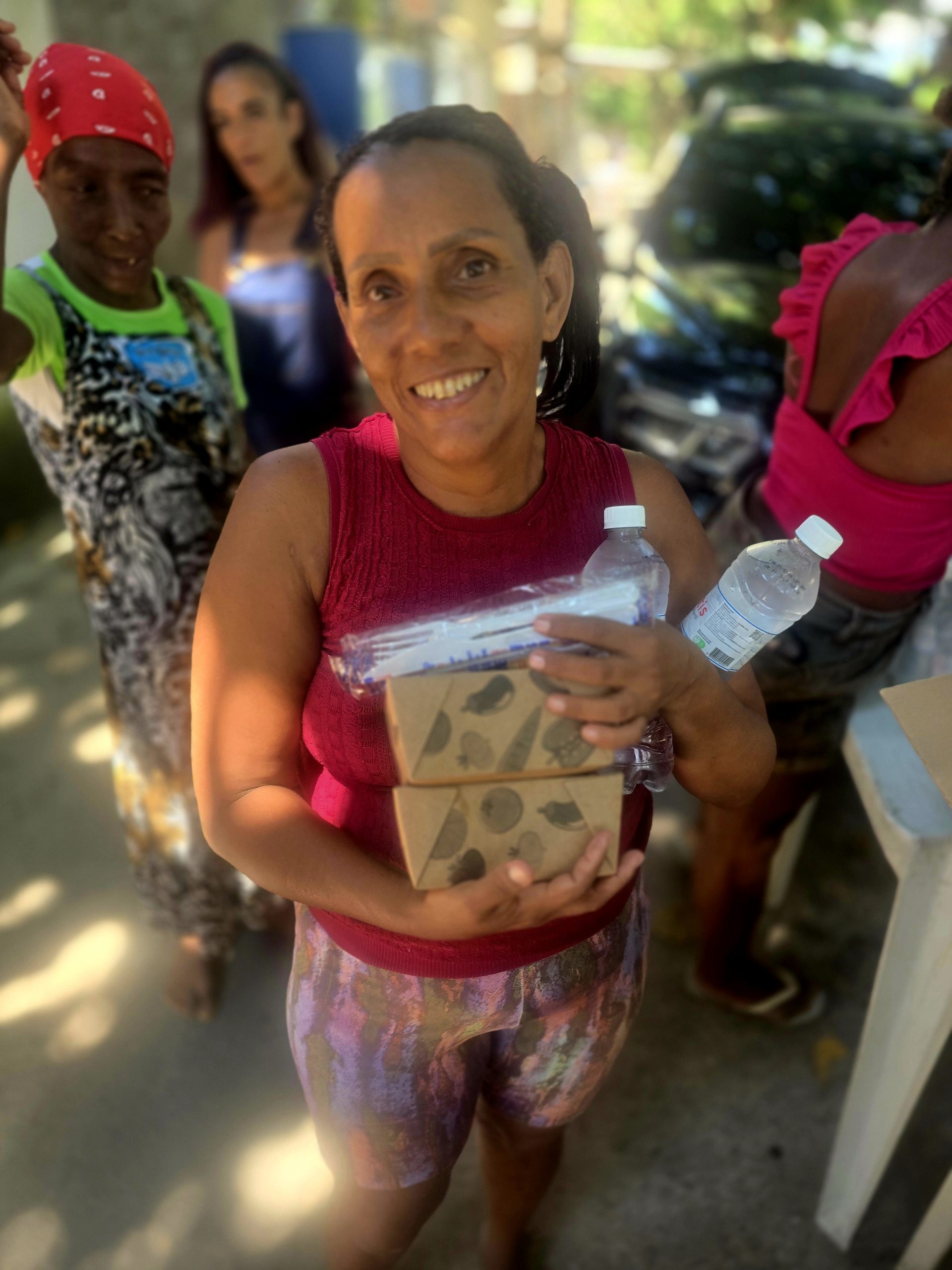
On one side, food in good condition is still wasted every day. On the other, families in extreme vulnerability and people experiencing homelessness continue to lack regular access to dignified meals.
Zero Waste operates at this point of connection: bringing together companies, food that is safe for consumption and a social operation capable of turning donations into real impact. At ONG É Por Amor, these foods mainly strengthen the Community Kitchen in Manguinhos and hunger relief actions in Rio de Janeiro.
A simple chain, with profound impact.
The program depends on coordination, trust, logistics and responsible food handling. Each step must work so that donations arrive with dignity to those who need them.
Identifying available food
Corporate partners and support networks identify food that is safe for consumption and can be donated, preventing unnecessary disposal.
Coordination with partners
ONG É Por Amor works in a network with partners such as Comida Invisível, Fairmont Rio de Janeiro Copacabana, Sheraton Grand Rio and JW Marriott, strengthening the connection between surplus food and hunger relief.
Collection, screening and organization
Donations are received and organized according to the NGO’s operational capacity, considering food safety, logistics, expiration dates, storage and responsible use.
Turning donations into concrete care
The food strengthens the Community Kitchen, reduces production costs and helps maintain meal distribution for families in Manguinhos and people facing vulnerability.
The problem is not a lack of food. It is also loss, disposal and logistics.
The figures below help explain why Zero Waste is more than an isolated action: it is a practical response to a structural challenge in Brazil.
of food are produced annually in Brazil. In a country with high food production, waste reveals failures in the connection between abundance, logistics and access.
of food are wasted every year in Brazil across the chain, from farm to table. This volume shows that fighting waste is also a concrete strategy to confront hunger.
per person per year is the estimated food waste at the household consumption stage in Brazil, reinforcing that change depends on the production chain, companies, institutions and society.
of global greenhouse gas emissions are associated with food loss and waste. Reducing disposal also means reducing environmental pressure and strengthening real ESG practices.
The evolution of donations received by the project.
The chart shows the growth of food donations received by the Zero Waste project, highlighting the expansion of partnerships and the consolidation of a network capable of transforming surplus food that is safe for consumption into food security.

Companies and organizations helping turn surplus into impact.
Zero Waste becomes stronger when companies understand that social responsibility, fighting waste and confronting hunger can move together. The presence of these partners expands the credibility, traceability and reach of the operation.
 Coordination and food waste reduction
 Partner hotel
 Partner hotel
 Partner hotel
Food donation requires care, method and responsibility.
ONG É Por Amor recognizes that an important part of the Community Kitchen operation depends on donated supplies. For this reason, the kitchen’s financial costs may appear lower than they would be in a fully purchased operation.
Donated food reduces direct costs
Many ingredients used in meal production arrive through donations and partnerships. This increases the efficiency of the operation and allows financial resources to be converted into greater social impact.
Logistics remains a bottleneck
Even when food is donated, the operation requires collection, transportation, organization, storage, preparation and distribution. For this reason, financial and structural support remains essential.
Social and environmental impact move together
By preventing food that is safe for consumption from being discarded, the program helps reduce waste, ease environmental pressure and strengthen hunger relief actions.
Corporate partnerships with ESG meaning
Partner companies strengthen their social and environmental action by connecting surplus, corporate responsibility and direct support to an organization with territorial presence.
Less waste. More meals. More dignity.
Zero Waste translates the ESG agenda into concrete action: it reduces losses, strengthens food security, brings companies closer to the social reality of the territory and creates a bridge between environmental responsibility and human care.
Environmental
Reducing waste of food that is safe for consumption, contributing to less disposal and better use of resources already produced.
Social
Strengthening the Community Kitchen and expanding access to meals for people facing social vulnerability.
Governance
An operation based on partnerships, responsibility, transparency and accountability regarding the use of resources and donations received.
Your company can help turn surplus into dignity.
Support Zero Waste through food donations, logistics support, financial investment, corporate volunteering or an ESG partnership with ONG É Por Amor.